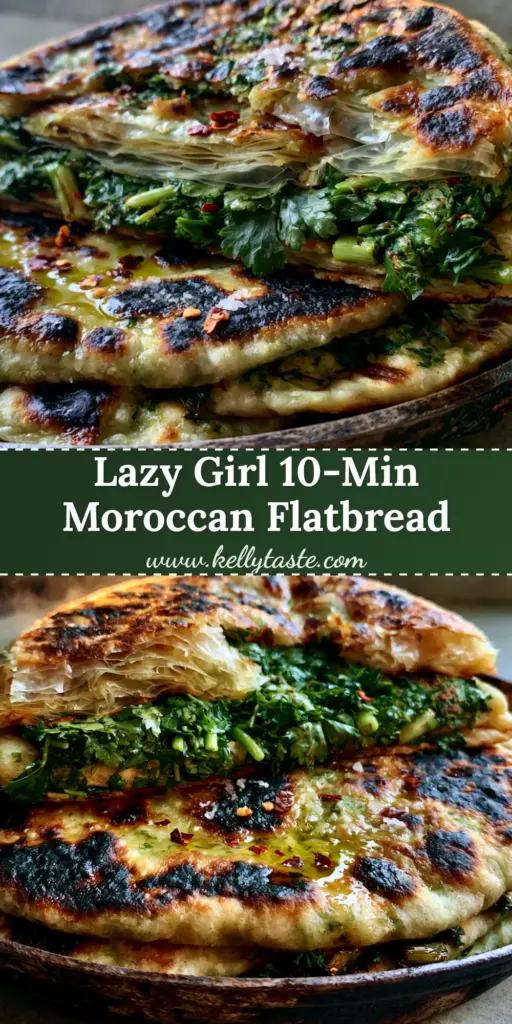
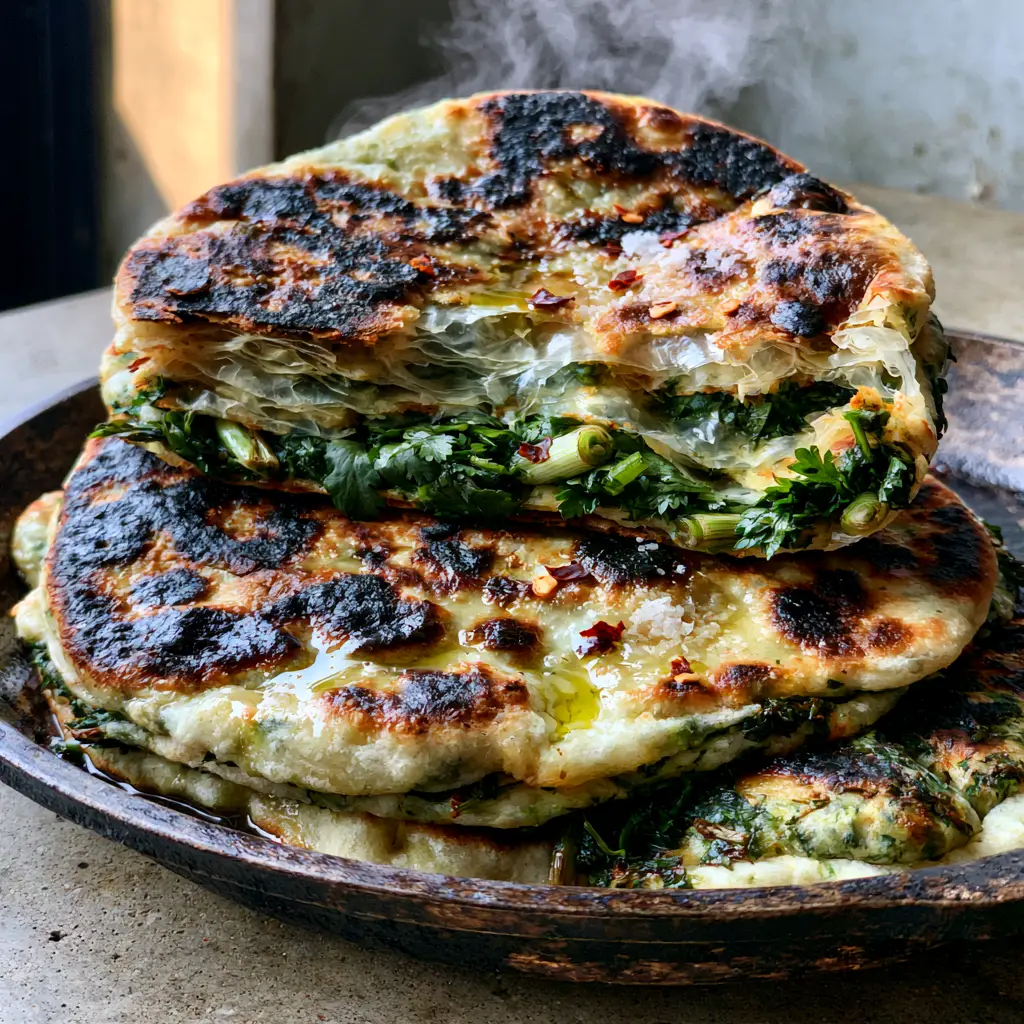
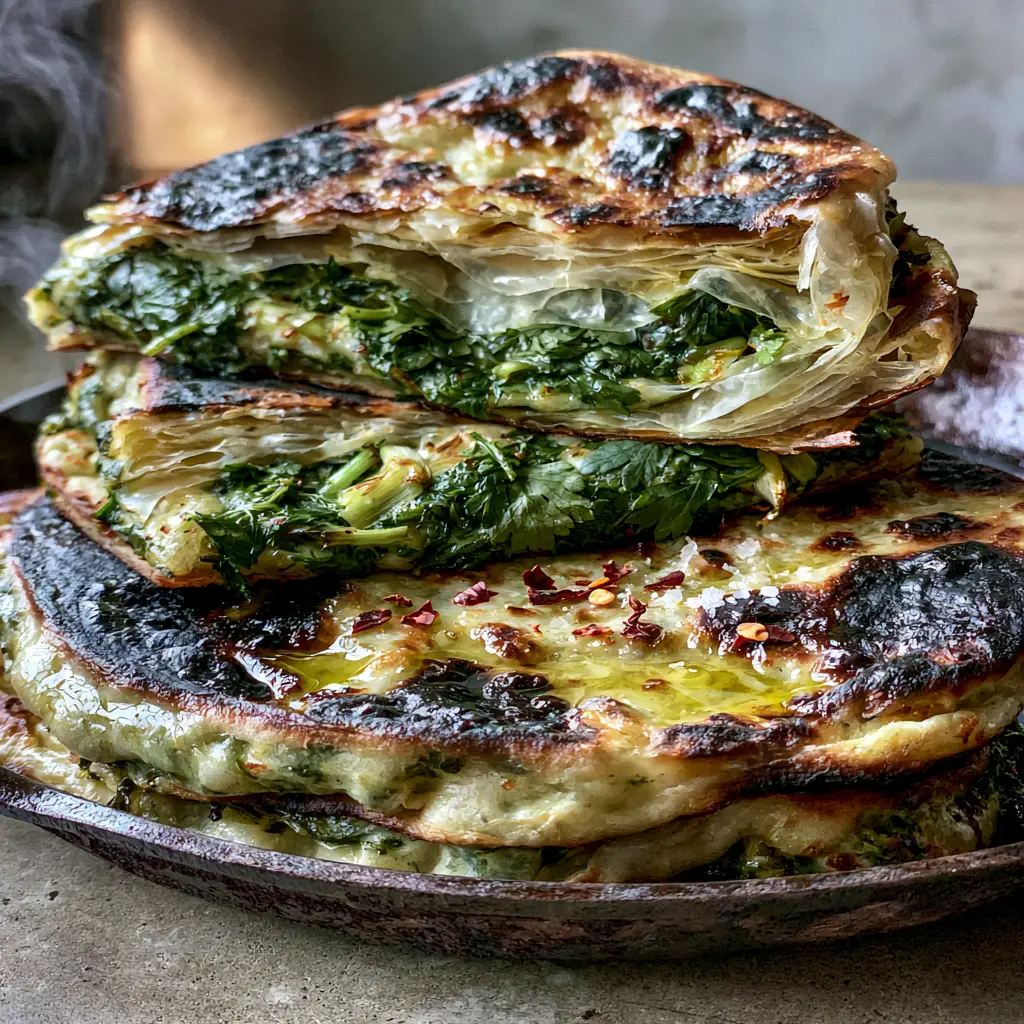
There is nothing quite like the sensory experience of a moroccan herb-stuffed flatbread fresh off the skillet. As you tear into the golden-brown crust, a cloud of rising steam carries the aroma of toasted semolina and fresh-cut herbs directly to your senses. The exterior, mottled with dark, blistered charred spots, gives way to dozens of paper-thin, translucent flaky layers that shatter with every bite.
This isn’t just a side dish; it is a culinary masterpiece of texture and vibrant color. The stuffing, an emerald green explosion of finely chopped cilantro, flat-leaf parsley, and sliced scallions, remains bright and fresh against the rich, glistening olive oil that permeates the dough. Finished with a sprinkle of red chili flakes and coarse flaky sea salt, this bread is the ultimate comfort food for those who appreciate authentic global flavors.
Why This Moroccan Herb-Stuffed Flatbread is a Skillet Essential
- Visual Texture: The contrast between the dark, charred skillet bubbles and the glistening golden dough creates a professional, rustic aesthetic.
- Laminated Layers: Using a traditional folding technique, we create translucent layers that are light enough to see through but sturdy enough to hold the stuffing.
- Herbaceous Core: A dense, emerald green filling of cilantro, parsley, and scallions provides a fresh, earthy counterpoint to the buttery dough.
- Perfect Crunch: The addition of flaky sea salt and red chili flakes on the surface provides a final pop of texture and controlled heat.
The Foundation: Ingredients for Success
Achieving the perfect moroccan herb-stuffed flatbread requires a balance of pantry staples and garden-fresh aromatics. Each ingredient serves a specific structural or flavor purpose in this traditional North African-inspired recipe.
The Dough Components
All-Purpose Flour (3 cups / 375g): This provides the necessary gluten structure for elasticity, allowing you to stretch the dough into paper-thin sheets without tearing.
Fine Semolina (1/2 cup / 90g): Semolina is the “secret” to that signature Moroccan crunch; it adds a slightly gritty, golden texture that distinguishes this from standard flour tortillas.
Warm Water (1 1/4 cups / 300ml): Temperature matters here; warm water relaxes the gluten immediately, reducing the resting time needed for the dough.
The Emerald Green Stuffing
Fresh Cilantro (1 cup / 30g): Finely chopped cilantro provides a citrusy, bright high note that cuts through the richness of the olive oil.
Flat-Leaf Parsley (1 cup / 30g): Parsley offers a clean, peppery backbone to the herb mix, ensuring the flavor is well-rounded and deep.
Green Onions (4 stalks): Sliced into thin rounds, these melt slightly during cooking, adding a mild sweetness and extra moisture to the internal layers.
Finishing Touches
Extra Virgin Olive Oil (1/2 cup / 120ml): This is used both for laminating the dough and for achieving that glistening, professional sheen on the finished bread.
Red Chili Flakes & Sea Salt: These are the visual and flavor “jewelry” of the dish, adding spice and sharp mineral notes to the charred exterior.
Essential Equipment for a Perfect Char
To replicate the authentic social media food photography look, you need the right tools to manage high-heat conductivity. A heavy-bottomed 12-inch (30cm) cast iron skillet is non-negotiable for achieving those iconic dark, blistered spots.
You will also need a clean, large workspace—preferably a marble or stainless steel countertop—to stretch the dough until it is translucent. A sharp chef’s knife is required to mince the herbs finely so they distribute evenly without creating lumps in the delicate layers.
Step-by-Step Mastery of the Moroccan Herb-Stuffed Flatbread
Preparing the Elastic Dough
In a large mixing bowl, whisk together the flour, semolina, and 1 tsp (6g) of fine sea salt. Gradually pour in the warm water while mixing with your hand until a shaggy dough forms. Knead the dough for 8-10 minutes until it is smooth, supple, and bounces back when poked.
Divide the dough into 8 equal-sized balls. Coat each ball lightly with olive oil and place them on a tray. Cover with plastic wrap and let them rest for at least 30 minutes; this relaxation period is vital for achieving those paper-thin, translucent layers later.
Creating the Herbaceous Filling
While the dough rests, wash and thoroughly dry your cilantro, parsley, and green onions. It is critical that the herbs are dry to prevent the dough from becoming soggy. Finely chop the herbs until they resemble a vibrant green confetti.
Mix the chopped herbs in a small bowl with 1/2 tsp (1g) of red chili flakes and 1 tbsp (15ml) of olive oil. This oil coating helps the herbs “stick” to the dough layers during the folding process.
The Art of the Fold (Lamination)
Generously grease your work surface with olive oil. Take one dough ball and flatten it with your palm. Using oiled hands, gently stretch the dough outward from the center until it forms a large, translucent square. You should be able to see the countertop through the dough.
Sprinkle a handful of the herb mixture evenly over the surface. Fold the top third of the dough down to the center, then the bottom third up, creating a long rectangle. Fold the left side to the center and the right side over that to form a neat, herb-filled square. Repeat with all dough balls.
Searing to Golden-Brown Perfection
Heat your cast iron skillet over medium-high heat until it is wisps of smoke begin to rise. Lightly oil the skillet. Take one stuffed square and gently pat it out to flatten it slightly. Carefully place it in the hot skillet.
Cook for 2-3 minutes per side. Watch for the dough to puff up and develop those characteristic dark, charred bubbles. The exterior should be golden-brown and crispy. Brush the hot bread with a light sheen of olive oil immediately after removing it from the heat.
Expert Tips for Success
- The Windowpane Test: When stretching your dough, if it snaps back, let it rest for another 10 minutes. It needs to be relaxed enough to stretch without resistance.
- Control the Heat: If the bread is browning too fast but the inner layers feel doughy, drop the heat to medium. The goal is a crispy exterior with fully cooked, tender internal layers.
- Dry the Herbs: Use a salad spinner or paper towels to ensure herbs are bone-dry. Excess moisture will cause the dough to steam from the inside out and tear.
- Finishing Salt: Always add the flaky sea salt while the olive oil sheen is still wet on the surface so it adheres properly.
Best Ways to Store and Reheat
These flatbreads are best enjoyed immediately while the steam is still rising. However, you can store leftovers in an airtight container at room temperature for up to 2 days. To maintain the flaky texture, reheat in a dry skillet over medium heat for 1-2 minutes per side until the edges crisp up again. Avoid the microwave, as it will make the laminated layers chewy rather than crispy.
What to Serve with Stuffed Flatbread
This savory moroccan herb-stuffed flatbread pairs beautifully with a variety of textures. Serve it alongside a bright Peach Feta Salad to balance the char with sweetness. For a more substantial meal, it makes an excellent vessel for scooping up the toppings of Smash Tacos or as a side for a spicy bowl of Buldak. If you’re hosting a party, these are much more impressive than standard Cheesy Italian Pinwheels.
Frequently Asked Questions
Yes, you can prepare the dough balls and keep them refrigerated for up to 24 hours. Just make sure they reach room temperature before you try to stretch them.
No, fresh herbs are essential for this recipe. Dried herbs will not provide the vibrant emerald green color or the moisture needed to keep the internal layers tender.
A cast iron skillet is best because it retains high heat evenly, which is necessary to create the dark, blistered bubbles without overcooking the inside.
The flakiness comes from a lamination technique where the dough is stretched until translucent and folded multiple times with olive oil, creating dozens of distinct, thin layers.
This usually happens if the dough wasn’t allowed to rest long enough or if you didn’t use enough olive oil during the folding process. The oil is what fries the layers into crispiness.
Authentic Moroccan Herb-Stuffed Flatbread Recipe
Moroccan Herb-Stuffed Flatbread with Crispy Flaky Layers
Ingredients
Equipment
Method
- Combine flour, semolina, and salt. Add warm water and knead for 8-10 minutes until smooth and elastic.
- Divide into 8 balls, coat with oil, and rest covered for 30 minutes to relax gluten.
- Finely chop cilantro, parsley, and scallions. Mix with a dash of oil and chili flakes.
- Stretch each ball on an oiled surface until translucent. Sprinkle with herbs and fold into a square envelope.
- Cook in a hot cast iron skillet for 2-3 minutes per side until charred bubbles and golden-brown crust appear.
- Brush with olive oil and sprinkle with flaky sea salt and chili flakes while hot.
Notes
Resting the dough is non-negotiable for achieving the paper-thin stretch.
Share the Flaky Goodness!
This moroccan herb-stuffed flatbread is a testament to the beauty of simple ingredients handled with care. The combination of charred bubbles and emerald herbs is a showstopper at any table. If you enjoyed this recipe, please leave a comment below and share your photos! Don’t forget to follow us on Pinterest for more visually stunning and delicious recipes.