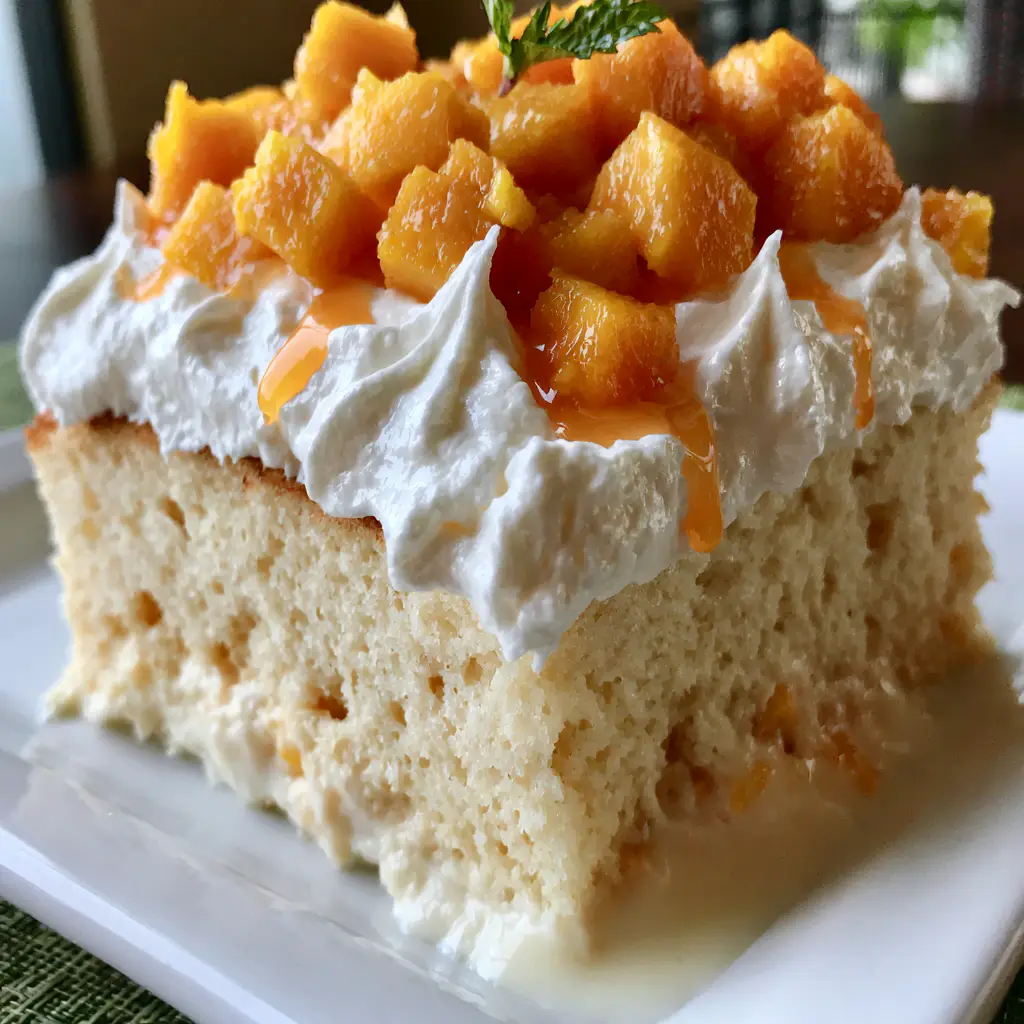
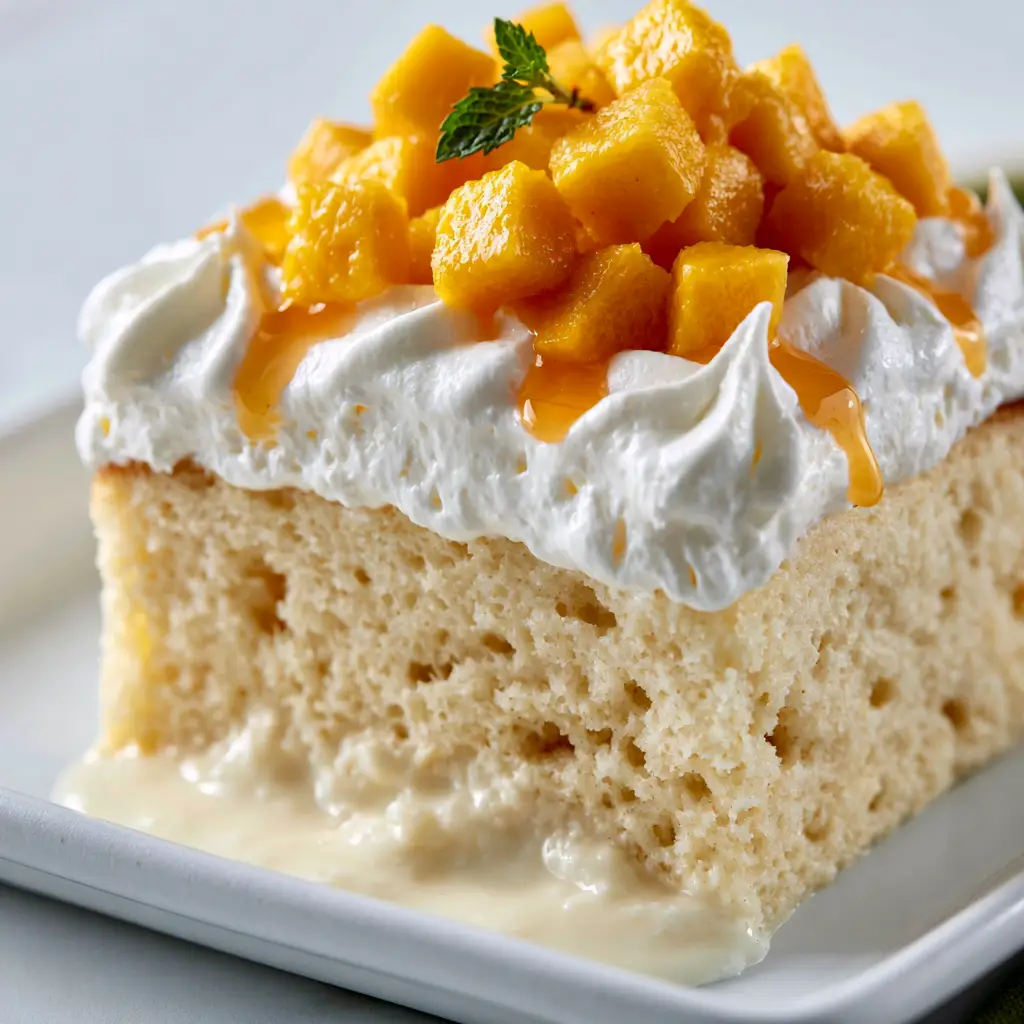
Mango tres leches cake is the ultimate fusion of creamy Latin American tradition and vibrant tropical flair. Imagine a golden-yellow vanilla sponge, so perfectly aerated that it acts like a delicious sponge, soaking up a luscious three-milk blend while maintaining its structural integrity. Every bite delivers a symphony of textures, from the moist, saturated base to the cloud-like billows of stabilized whipped cream.
The crown jewel of this dessert is the generous pile of glistening, deep-orange Manila mangoes, finished with a bright spark of lime zest and a fresh mint sprig. This isn’t just a cake; it is a sensory experience that captures the warmth of afternoon sunlight on a plate. Whether you are hosting a summer soirée or looking for the perfect finale to a spicy meal, this dessert is a guaranteed showstopper.
Building the perfect mango tres leches cake requires a delicate balance of moisture and stability. Unlike a standard butter cake, which might turn into a soggy mess, our specific aeration technique ensures that the cake holds a sharp, clean vertical edge even when resting in an elegant pool of cream. This guide will walk you through the culinary science of the perfect soak and the art of the 1-inch cream topping.
What Makes This Tropical Mango Tres Leches Cake Stand Out?
- Unrivaled Texture: An ultra-aerated sponge designed specifically to absorb the three-milk soak without sagging or losing its shape.
- Forensic Visual Appeal: A stunning 1-inch (2.5cm) layer of snowy white stabilized whipped cream that provides the perfect canvas for vibrant fruit.
- Vibrant Flavor Profile: The buttery sweetness of Manila mangoes is perfectly countered by the aromatic zing of fresh lime zest.
- Professional Presentation: Engineered to produce clean, sharp slices that look just as good on the plate as they do in a professional food photograph.
The Essential Components for a Structurally Sound Sponge
To achieve that iconic mango tres leches cake texture, we must select ingredients that provide both lift and absorption capacity. We avoid heavy fats in the base sponge to ensure the air pockets remain open and ready for the milk mixture.
All-Purpose Flour: 1.5 cups (190g). This provides the necessary gluten structure to hold the weight of the three-milk soak without collapsing.
Large Eggs: 5 count. Separating the yolks and whites is the secret to the “aerated” sponge; the whipped whites provide the lift, while the yolks add the golden-yellow hue.
Granulated Sugar: 1 cup (200g). Sugar does more than sweeten; it stabilizes the egg foam, ensuring your sponge doesn’t deflate during the folding process.
Baking Powder: 1.5 tsp (7g). A chemical leavener that works in tandem with the whipped eggs to create those crucial “milk-trapping” pores.
Whole Milk: 0.33 cup (80ml). Just enough moisture to keep the initial crumb tender before the primary soak is added.
Vanilla Extract: 1 tbsp (15ml). A high-quality extract bridges the flavors of the creamy milk and the floral mango notes.
Crafting the Signature Three-Milk “Tres Leches” Soak
The magic of a mango tres leches cake lies in the ratio of the three milks. We need a mixture that is thick enough to feel luxurious but fluid enough to penetrate the center of the sponge.
Sweetened Condensed Milk: 1 can (14oz / 397g). This provides the essential syrupy sweetness and a thick, velvety mouthfeel that defines the dessert.
Evaporated Milk: 1 can (12oz / 354ml). Evaporated milk adds a concentrated “cooked milk” flavor that is deeper and more complex than regular milk.
Heavy Cream: 0.25 cup (60ml). The third “leche” rounds out the soak, adding a high-fat richness that prevents the cake from feeling overly sugary.
The Topping: Stabilized Cream and Manila Mangoes
For a professional finish, the whipped cream must be thick and stable enough to hold a 1-inch (2.5cm) height without weeping over time.
Heavy Whipping Cream: 2 cups (480ml). Ensure this is very cold to achieve the maximum volume and soft, snowy peaks seen in the visual prompt.
Confectioners Sugar: 0.25 cup (30g). Beyond sweetness, the cornstarch found in powdered sugar helps stabilize the cream for long-lasting peaks.
Manila Mangoes: 3 large ripe mangoes. Manila mangoes are chosen for their smooth, non-fibrous texture and deep orange color which glistens when cubed.
Fresh Lime Zest: 1 tbsp (approx. 2 limes). The tiny green flecks provide a necessary acidic counterpoint to the rich, creamy base.
Fresh Mint: 1 small sprig per slice. A decorative element that adds a refreshing aromatic note the moment the plate is served.
Specialized Equipment for Forensic Results
To replicate the sharp edges and perfectly cubed fruit of our visual blueprint, you will need a few specific kitchen tools. A 9×13 inch (23x33cm) glass or ceramic baking dish is standard, but a springform pan can be used if you desire a freestanding cake with visible layers.
A stand mixer or high-powered hand mixer is non-negotiable for achieving the aerated sponge and the thick layer of whipped cream. Finally, a microplane grater is essential for creating those “tiny flecks” of bright green lime zest that are scattered across the glistening mangoes.
Step-by-Step Instructions for the Perfect Mango Tres Leches Cake
1. Preparing the Aerated Vanilla Sponge
Preheat your oven to 350°F (175°C). Grease a baking dish but do not flour it, as we want the sponge to “climb” the walls for maximum height. Separate your eggs into two clean bowls.
Beat the egg yolks with 0.75 cup (150g) of sugar until they are pale, thick, and fall in ribbons from the whisk. In a separate bowl, whip the egg whites until soft peaks form, then gradually add the remaining 0.25 cup (50g) of sugar, beating until the whites are stiff and glossy.
Gently fold the yolk mixture into the whites using a large spatula. Sift the flour and baking powder over the eggs and fold with a light hand, ensuring you don’t deflate the air bubbles. Pour the batter into the dish and bake for 25-30 minutes, or until a toothpick comes out clean and the top is a beautiful golden-yellow.
2. The Forensic Soaking Process
Allow the cake to cool for at least 30 minutes. Once warm but not hot, use a fork to poke holes across the entire surface of the cake, spaced about 0.5 inches (1.2cm) apart. Ensure you poke all the way to the bottom to allow the milk to travel through the entire vertical edge.
Whisk the condensed milk, evaporated milk, and 0.25 cup (60ml) of heavy cream together. Slowly pour the mixture over the cake, starting from the edges and moving toward the center. Cover and refrigerate for at least 4 hours, though overnight is ideal for the cake to fully saturate and develop its signature moisture.
3. Whipping the 1-Inch Stabilized Topping
Place your whisk attachment and mixing bowl in the freezer for 10 minutes. Combine the cold heavy whipping cream, vanilla, and confectioners sugar. Beat on medium-high speed until the cream reaches stiff peaks—it should be thick enough to hold a sharp shape.
Spread the cream over the chilled cake in an even, 1-inch (2.5cm) thick layer. Use an offset spatula to create the “soft peaks” described in the visual blueprint. If you are looking for more fruit-forward inspiration, you might enjoy our creamy mango mousse cake as well.
4. The Finishing Flourish: Mangoes and Zest
Peel the Manila mangoes and cut the flesh away from the flat pit. Slice the fruit into uniform 0.5-inch (1.2cm) cubes. These should be glistening and deep orange. Pile the mangoes generously in the center of the cake or atop individual slices.
Freshly zest the lime directly over the mangoes so the aromatic oils land on the fruit. The tiny green flecks against the orange mango and snowy white cream create a striking visual contrast. Finish each serving with a small, organic sprig of mint.
Expert Tips for Success
- Temperature Control: Always use cold cream for the topping. If the room is warm, the 1-inch layer will lose its sharp vertical edge and begin to sag.
- Sifting is Key: To ensure the “aerated” texture of the sponge, sift your flour twice. This removes clumps that could weigh down the egg foam.
- The Resting Period: Do not rush the soak. A mango tres leches cake needs time for the proteins in the cake to bond with the fats in the milk, creating that clean cut.
- Mango Selection: Look for Manila mangoes that give slightly to pressure and have a sweet fragrance at the stem. If they aren’t ripe, they won’t have the “glistening” appearance required.
Storage and Make-Ahead Advice
This cake is a fantastic make-ahead dessert. In fact, it tastes better on day two once the flavors have fully melded. Store the cake in the refrigerator, tightly covered, for up to 4 days. Because of the stabilized whipped cream, the topping will hold its shape quite well.
We do not recommend freezing the fully assembled cake, as the texture of the three-milk soak and the fresh mangoes will change significantly upon thawing. However, you can bake and freeze the dry sponge (wrapped tightly in plastic) for up to 3 months.
What to Serve With This Tropical Delight
The richness of the mango tres leches cake pairs beautifully with light, acidic, or savory-leaning dishes. For a complete tropical menu, start with a zesty Thai mango salad or a refreshing classic mango salad.
If you are serving this at a brunch, consider pairing it with protein-packed Greek yogurt waffles to balance the sweetness. For a late-night treat, a small bowl of shaved mango bingsu offers a different temperature contrast to the creamy cake.
Frequently Asked Questions
Yes, but look for non-fibrous varieties like Ataulfo or Honey mangoes. Avoid ‘stringy’ mangoes, as they won’t provide the clean, cubed appearance required for professional food styling.
While possible, frozen mangoes tend to release excess water as they thaw, which can bleed into the whipped cream. For the ‘glistening’ visual result in the blueprint, fresh Manila mangoes are highly recommended.
Ensure the cake has chilled for at least 4-8 hours so the structure sets. Use a long, sharp knife dipped in hot water and wiped dry between every single cut.
Using confectioners sugar (which contains cornstarch) is the easiest way. For even more stability, you can add a tablespoon of instant vanilla pudding mix or a small amount of gelatin to the cream while whipping.
Sogginess usually occurs if you use a fat-heavy butter cake instead of an aerated sponge. The sponge cake’s air pockets are essential for holding the milk in suspension rather than letting it turn the base into mush.
The Ultimate Mango Tres Leches Cake Recipe

Mango Tres Leches Cake: The Ultimate Tropical Summer Dessert
Ingredients
Equipment
Method
- Beat egg yolks with 3/4 cup sugar until pale and thick.
- Whip egg whites to soft peaks, add remaining sugar, and beat to stiff peaks.
- Fold yolks into whites, then fold in sifted dry ingredients and milk. Bake at 350°F (175°C) for 25-30 minutes.
- Once cooled slightly, poke holes across the entire surface of the cake with a fork.
- Whisk the three milks together and pour slowly over the cake. Chill for at least 4 hours.
- Beat cold heavy cream and confectioners sugar until stiff peaks form. Spread in a 1-inch thick layer.
- Top with cubed Manila mangoes, lime zest flecks, and a sprig of fresh mint.
Notes
Ensure the cake is fully chilled before adding the whipped cream layer.
Bringing the Tropics to Your Kitchen
Mastering the mango tres leches cake is a rewarding endeavor for any home cook. The combination of the moisture-wicking sponge, the decadent three-milk soak, and the fresh, glistening Manila mangoes creates a dessert that is as visually stunning as it is delicious. By following our culinary forensic approach, you ensure a perfect slice every time—sharp edges, snowy cream, and all.
We would love to see your creations! If you enjoyed this recipe, please leave a comment below and share your photos with us. Don’t forget to follow KellyTaste on Pinterest for more high-resolution food inspiration and tropical dessert recipes.