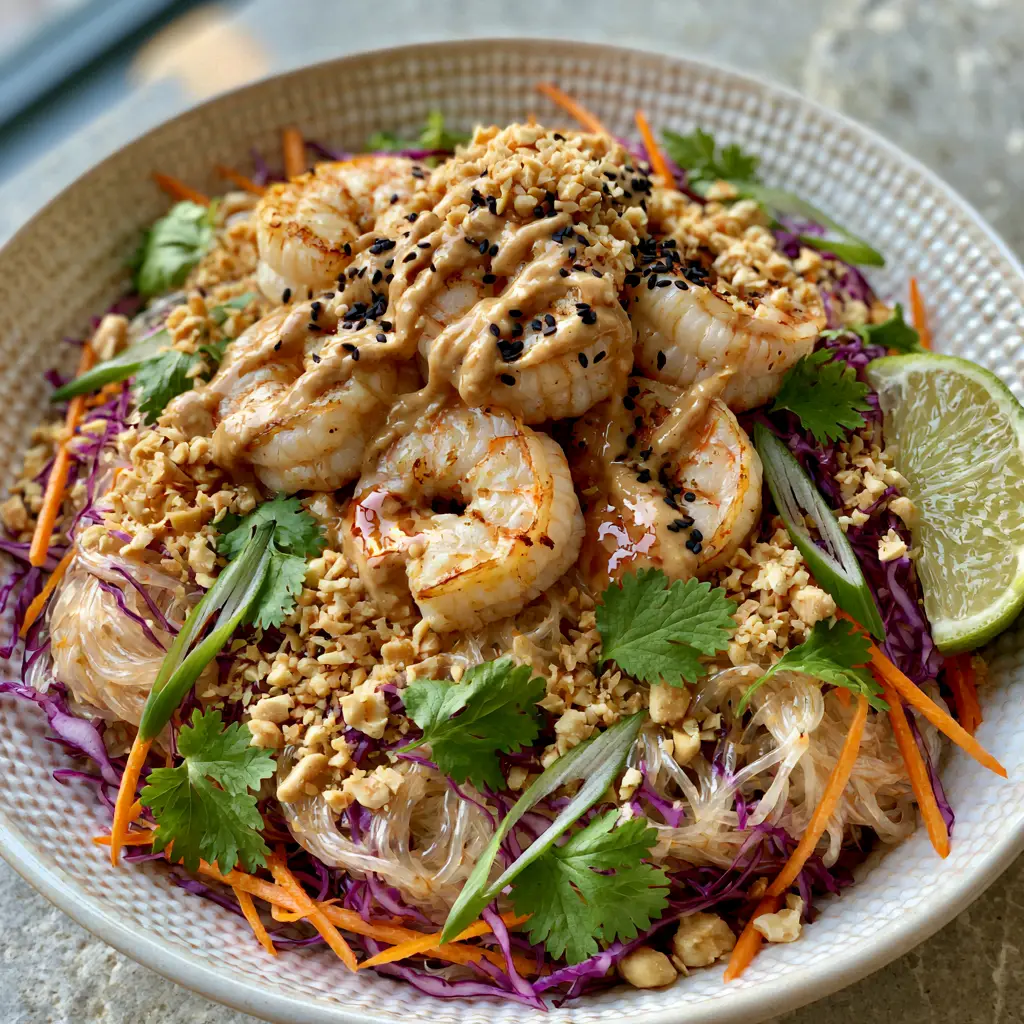
There is something undeniably hypnotic about a perfectly composed Thai Shrimp Noodle Salad. The way the translucent, glossy rice noodles catch the morning light, intertwined with vibrant ribbons of purple cabbage and bright orange carrots, creates a visual masterpiece before you even take the first bite.
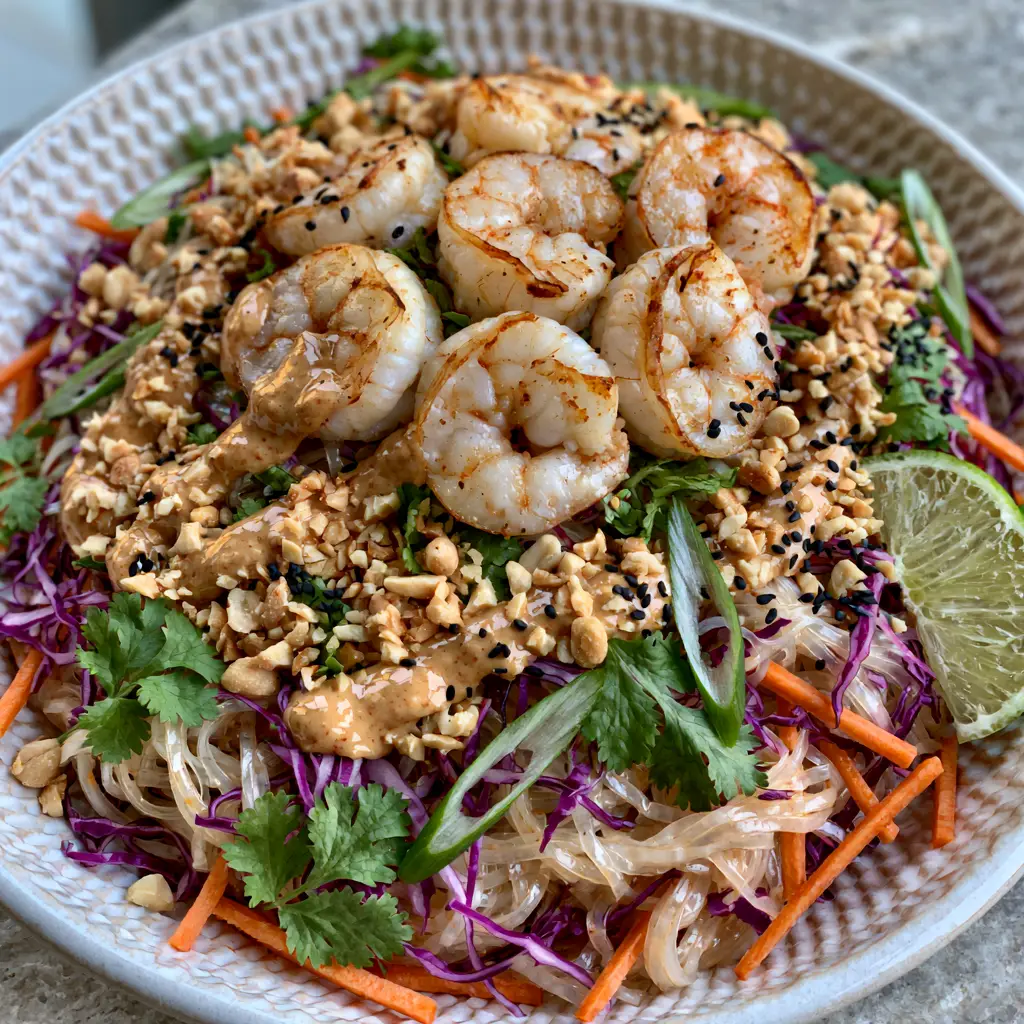
This recipe isn’t just a meal; it’s a sensory experience designed for those who crave the balance of refreshing crunch and savory warmth. We are focusing on jumbo shrimp, seared to a precise golden-pink, resting atop a bed of silky noodles and drizzled with a thick, tan-colored spicy peanut sauce.
Whether you are looking for a high-protein lunch or a show-stopping dinner, this Thai Shrimp Noodle Salad delivers professional-grade flavors with the comfort of a home-cooked meal. Let’s dive into the culinary science of making this vibrant bowl a reality in your kitchen.
Why This Vibrant Thai Noodle Bowl Works
- Textural Harmony: We pair the slippery, silky texture of chilled rice noodles with the aggressive crunch of raw purple cabbage and matchstick carrots.
- Seared Excellence: The jumbo shrimp are seared over high heat to achieve light golden edges while remaining succulent and tender inside.
- The “Liquid Gold” Dressing: A thick, creamy peanut dressing provides the necessary fat and salt to bridge the gap between the fresh vegetables and the neutral noodles.
- Aromatic Finishing: Fresh cilantro, sliced scallions, and roasted peanuts add layers of scent and flavor that develop as you eat.
The Anatomy of a Perfect Thai Shrimp Noodle Salad
To achieve the result seen in high-end culinary photography, every ingredient must serve both a structural and a visual purpose. We don’t just throw things in a bowl; we build layers of flavor.
Silky Rice Noodles: You will need 8 oz (225g) of thin or medium-width rice noodles. These provide the translucent base that absorbs the acidity of the lime and the richness of the peanut sauce.
Jumbo Shrimp (16/20 Count): Use 1 lb (450g) of jumbo shrimp, peeled and deveined. Their size is crucial for that “top-center” visual focal point and a satisfying protein bite.
Shredded Purple Cabbage: 2 cups (150g) of thinly sliced cabbage adds a necessary bitterness and a stunning pop of violet color that contrasts against the orange carrots.
Matchstick Carrots: 1 cup (125g) of julienned carrots provides sweetness. If you enjoy a variety of textures, you might also like this vibrant Thai mango salad for its fruit-forward crunch.
Creamy Peanut Dressing: A blend of creamy peanut butter, soy sauce, lime juice, and honey. This must be thick enough to show “sheen” in the light but pourable enough to drizzle artistically.
The Foundational Aromatics: We use 2 tbsp (30ml) of neutral oil for searing the shrimp and a pinch of sea salt to draw out the natural sweetness of the seafood.
Professional Equipment for Culinary Precision
To get those perfectly seared shrimp and thin vegetable ribbons, a few specific tools will make your life significantly easier and your plating more professional.
A heavy-bottomed cast iron or stainless steel skillet is essential for achieving the golden-pink crust on the shrimp without overcooking the centers. High heat retention is the secret here.
A sharp mandoline or a professional-grade chef’s knife is required for the cabbage and carrots. For the cabbage to look like “ribbons,” it must be sliced paper-thin, which is nearly impossible with a dull blade.
Finally, a large mixing bowl for shocking the noodles in ice water is vital. This stops the cooking process instantly, ensuring the noodles remain “glossy” and “silky” rather than mushy and starchy.
The Step-by-Step Blueprint for Success
Preparing the Translucent Rice Noodle Base
Bring a large pot of water to a rolling boil. Submerge 8 oz (225g) of rice noodles and cook according to package instructions—usually 3 to 5 minutes until just tender.
Immediately drain the noodles and plunge them into a large bowl of ice water. This “shocks” the starch, preventing the noodles from sticking and giving them that translucent, glossy appearance described in the visual prompt.
Once cooled, drain thoroughly and toss with 1 tsp (5ml) of toasted sesame oil. This adds a subtle nutty aroma and keeps the noodles “silky” as they sit.
Mastering the Golden-Pink Shrimp Sear
Pat your 1 lb (450g) of jumbo shrimp extremely dry with paper towels. Any moisture on the surface will create steam, preventing the golden crust we are looking for.
Heat 1 tbsp (15ml) of neutral oil in your skillet over medium-high heat until it begins to shimmer. Place the shrimp in the pan in a single layer, ensuring they do not touch.
Sear for 2 minutes per side. Look for the “Visual Cue”: the edges should turn a light golden-pink while the center transitions from translucent to opaque white. Remove from heat immediately to maintain succulence.
Emulsifying the Thick Peanut Dressing
In a medium bowl, whisk together 1/2 cup (125g) creamy peanut butter, 2 tbsp (30ml) soy sauce, 1 tbsp (15ml) fresh lime juice, 1 tbsp (15ml) honey, and 1 tsp (5g) grated ginger.
The sauce will likely be very thick. Slowly whisk in 2-3 tbsp (30-45ml) of warm water until the dressing reaches a “drizzlable” consistency that still holds its shape on a spoon.
For a variation on this flavor profile, you can explore our easy sesame noodle salad which uses a lighter, vinegar-based dressing.
Assembling the Vibrant White Ceramic Bowl
Start with a generous bed of the chilled rice noodles. Intersperse the thin ribbons of purple cabbage and matchstick carrots throughout the noodles to create a “nest” effect.
Place five jumbo shrimp in the top-center of the bowl. Using a spoon, drizzle the peanut sauce artistically across the shrimp and noodles, allowing it to pool slightly in the crevices.
Shower the dish with a handful of crushed roasted peanuts, fresh cilantro leaves, and thin diagonal slices of green onion. A final sprinkle of black sesame seeds provides the ultimate high-contrast finish.
Expert Tips for the Ultimate Thai Shrimp Noodle Salad
- Dry the Shrimp: As mentioned, moisture is the enemy of a good sear. If your shrimp are wet, they will boil in their own juices rather than caramelize.
- The Noodle Texture: If you find rice noodles too finicky, you can substitute with wheat-based noodles like those found in our chilled ramen salad guide.
- Peanut Butter Quality: Use a commercial creamy peanut butter (like Jif or Skippy) for the smoothest “sheen.” Natural peanut butters can sometimes be too gritty for an “artistic drizzle.”
- Lime Freshness: Never use bottled lime juice. The oils in the fresh lime zest and the bright acidity of a freshly squeezed wedge are non-negotiable for this dish.
Storage and Meal Prep Advice
This Thai Shrimp Noodle Salad is an excellent candidate for meal prep, though it is best enjoyed fresh. If storing, keep the dressing in a separate container to prevent the noodles from absorbing all the moisture.
The shrimp and vegetables will stay fresh in an airtight container for up to 2 days. We do not recommend freezing this dish, as the texture of the raw cabbage and rice noodles will degrade significantly upon thawing.
To refresh the salad the next day, add a squeeze of fresh lime juice and a teaspoon of warm water to the noodles to loosen them up before adding the peanut dressing.
What to Serve With Your Thai Shrimp Noodle Salad
While this bowl is a complete meal on its own, it pairs beautifully with other Asian-inspired starters. Consider serving it alongside savory Thai pork skewers for an extra boost of protein.
If you prefer a lighter accompaniment, a side of chilled edamame or a fresh fruit platter featuring mango and lime would complement the peanut flavors perfectly.
Frequently Asked Questions
Yes! You can substitute the peanut butter with almond butter or sunflower seed butter (SunButter) and replace the crushed peanuts with toasted sesame seeds or sunflower seeds for a similar texture.
This dish is traditionally served cold or at room temperature, which highlights the ‘silky’ texture of the noodles and the ‘crunch’ of the raw vegetables. However, the shrimp are best when freshly seared and still warm.
You must pat the shrimp extremely dry with paper towels before searing and use a high-heat oil (like avocado or canola) in a pre-heated heavy skillet. Avoid overcrowding the pan.
The creamy peanut dressing will stay fresh in an airtight container for up to 7 days. If it thickens too much in the fridge, whisk in a teaspoon of warm water to restore its drizzlable consistency.
The key is to ‘shock’ them in an ice water bath immediately after boiling to remove excess surface starch, then toss them in a small amount of neutral oil or toasted sesame oil.
The Ultimate Thai Shrimp Noodle Salad Recipe Card
Thai Shrimp Noodle Salad with Creamy Peanut Dressing
Ingredients
Equipment
Method
- Cook rice noodles in boiling water for 3-5 minutes until tender. Drain and immediately plunge into an ice water bath to ensure they remain silky and translucent.
- Pat shrimp very dry. Heat oil in a skillet over medium-high heat. Sear shrimp for 2 minutes per side until light golden-pink edges appear and the centers are opaque.
- Whisk peanut butter, soy sauce, lime juice, honey, and ginger together. Gradually add warm water until a thick, drizzlable consistency with a slight sheen is achieved.
- Mix noodles with cabbage and carrots. Top with seared shrimp. Drizzle peanut sauce over the top and garnish with peanuts, cilantro, scallions, and black sesame seeds.
Notes
Ensure the skillet is shimmering hot before adding shrimp to get the golden crust.
Final Thoughts on This Vibrant Creation
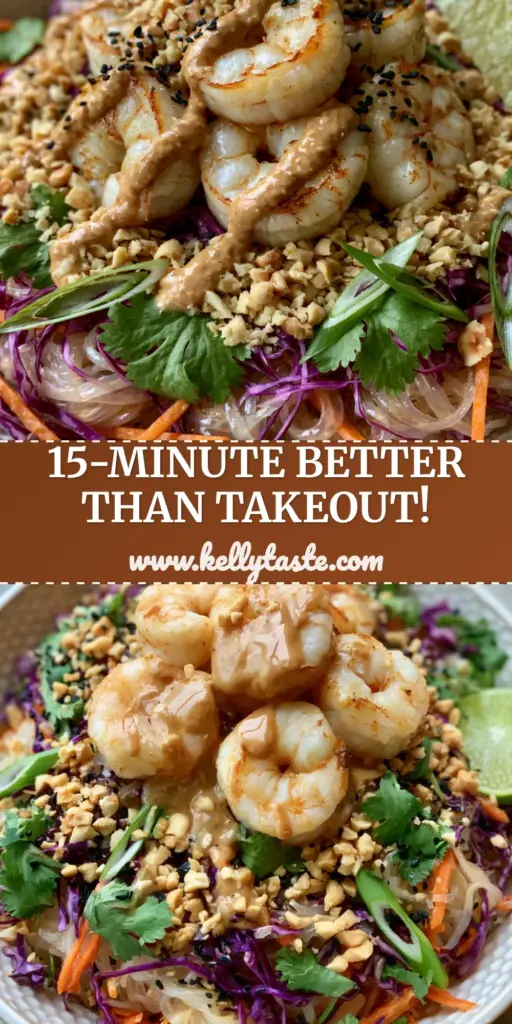
Creating a Thai Shrimp Noodle Salad that looks as good as it tastes is all about the details. From the “silky” texture of the shocked noodles to the light golden edges of the jumbo shrimp, these elements combine to create a restaurant-quality meal in your own kitchen.
If you enjoyed this recipe, please leave a comment below and let us know how your sear turned out! Don’t forget to follow us on Pinterest for more visual recipe blueprints and culinary inspiration.