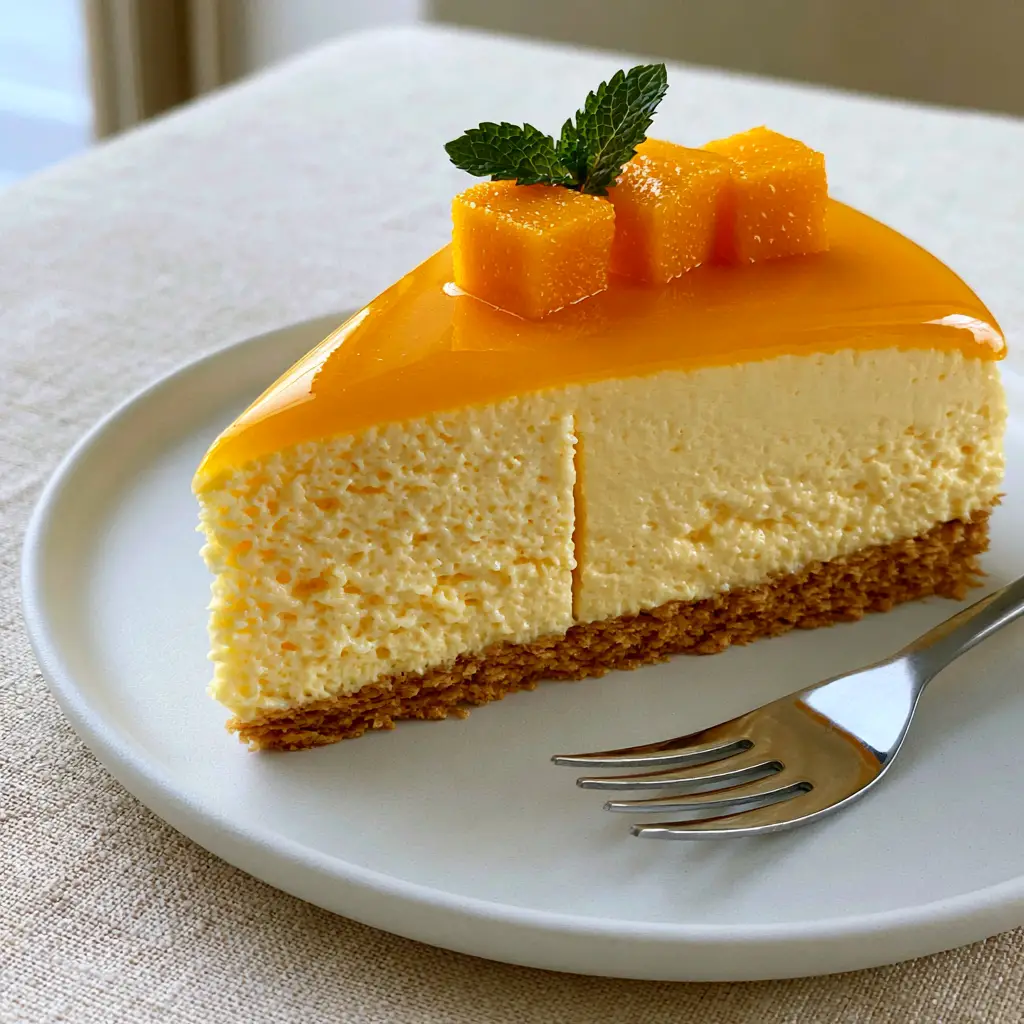
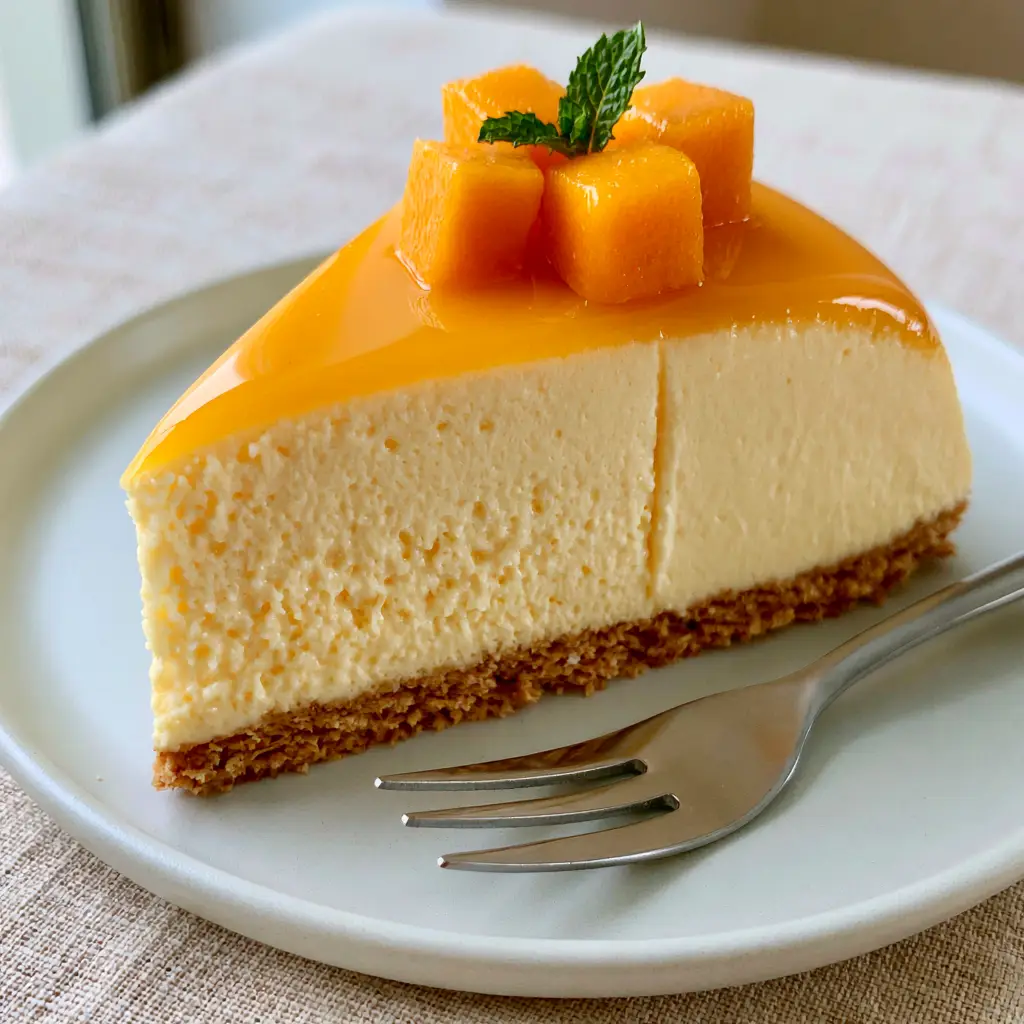
There is a specific kind of magic that happens when the vibrant, floral sweetness of sun-ripened Alphonso mangoes meets the velvety cloud of a professional-grade mousse. This mango mousse cake is not just a dessert; it is a structural triumph of pastry science and tropical flavor. Imagine a sharp-edged slice standing proudly on a matte white ceramic plate, its three horizontal layers as distinct and perfect as a coastal horizon at sunset.
From the golden-brown crunch of the pressed buttery biscuit foundation to the airy, pale yellow mousse filled with microscopic bubbles, every bite is a study in texture. The crowning glory is a thick, high-gloss vibrant orange mirror glaze that catches the light, reflecting the silver dessert fork resting beside it. This is the ultimate showstopper for home cooks who want to bridge the gap between “homemade” and “patisserie-quality.”
Why This Mango Mousse Cake Is the Ultimate Tropical Showstopper
- The Perfect Visual Contrast: The stark, horizontal lines between the golden crust, pale cream mousse, and neon-bright glaze create a professional aesthetic.
- Aerated Texture: Unlike dense cheesecakes, this mousse is specifically engineered to be light and airy, featuring visible tiny bubbles that melt on the tongue.
- High-Gloss Finish: The mirror glaze uses a specific gelatin-to-puree ratio to ensure a reflective, thick coating that doesn’t slide off the sides.
- Fresh Garnishes: Topped with three juicy cubes of fresh Alphonso mango and a single sprig of micro-mint for a burst of herbal freshness.
The Anatomy of a Perfect Mango Mousse Cake: Essential Ingredients
Buttery Biscuit Base: You will need 200g (approx. 1.5 cups) of digestive biscuits or graham crackers. These provide the structural foundation and a salty-sweet contrast to the cream. Ensure you use 100g (7 tbsp) of high-fat unsalted butter to bind the crumbs into a firm, sliceable crust.
Alphonso Mango Puree: The soul of the mango mousse cake depends on the quality of the fruit. Alphonso mangoes are preferred for their lack of fiber and intense orange hue. You will need 500ml (2 cups) of smooth, sieved puree to ensure the mousse and glaze remain perfectly silken.
Heavy Whipping Cream (35% Fat): This is the engine of the aeration. When whipped to soft peaks, it traps the air bubbles visible in the final slice, giving the cake its signature light-as-air mouthfeel.
Bloom-Strength Gelatin: Essential for the “sharp-edged” look described in our visual blueprint. We use powdered gelatin bloomed in cold water to provide the structural integrity needed to stand upright without sagging.
The Mirror Glaze Essentials: In addition to mango puree, you’ll need liquid glucose or light corn syrup. This is the secret “invisible” ingredient that creates the high-gloss, reflective surface seen in professional photography.
Professional Tools for Patisserie Results
To achieve the sharp edges seen on our light-grey stone surface background, you cannot rely on a standard cake pan. A 20cm (8-inch) springform pan or a bottomless cake ring is mandatory. Using acetate cake strips inside the ring will ensure the sides of your mango mousse cake are perfectly smooth when the mold is removed.
A fine-mesh sieve is also non-negotiable. Even the best mangoes have small fibers that can ruin the “glossy” mirror finish. Passing your puree through a sieve twice ensures that the light reflects off the glaze without any bumps or imperfections.
Step-by-Step Architecture: Building the Perfect Slice
Constructing the Golden-Brown Biscuit Foundation
Begin by pulsing your biscuits in a food processor until they resemble fine sand. Melt your butter and stir it into the crumbs until the mixture feels like wet beach sand. Press this firmly into the bottom of your lined pan, using the bottom of a flat glass to ensure an even, level surface.
Chill this base for at least 30 minutes. This “sets” the butter, creating a sturdy platform that won’t crumble when you pour the mousse on top. If you enjoy this tropical profile, you might also love our mango tres leches cake for a different take on mango textures.
Mastering the Pale Yellow Aerated Mousse
Bloom your gelatin in 60ml (1/4 cup) of cold water until it forms a thick paste. Gently warm 100ml of your mango puree and stir in the gelatin until dissolved. Fold this into the remaining puree, then carefully fold in your whipped heavy cream.
The key here is “folding.” Use a silicone spatula to incorporate the cream without deflating the air bubbles. This is what creates the “airy middle layer” seen in the visual prompt. Pour this over your chilled base and smooth the top with an offset spatula. Chill for 4 hours until firm to the touch.
The Secret to the High-Gloss Orange Mirror Glaze
Combine 200ml (3/4 cup) of mango puree with sugar and a tablespoon of glucose syrup. Heat gently, then stir in your bloomed gelatin. Once the mixture cools to approximately 32°C (90°F), pour it over the set mousse.
The temperature is critical. If it’s too hot, it will melt the mousse; too cold, and it won’t spread into that perfectly horizontal, thick orange layer. Let the cake set overnight for the most stable, sharp-edged results. For more mango-centric inspiration, check out our fresh mango salad or the cooling mango bingsu.
Expert Tips for Visual Perfection
- The Clean Cut: To get that “sharp-edged slice” seen on the white plate, dip a long, thin knife in hot water and wipe it dry between every single cut.
- Temperature Control: Never pour the glaze while the cake is at room temperature. The cake must be “fridge-cold” to help the glaze set instantly upon contact.
- Bubble Removal: If you see tiny air bubbles on the surface of your glaze, gently run a kitchen torch high above the surface or pop them with a toothpick before the gelatin sets.
- Flavor Pairing: If you’re serving this as part of a larger spread, it pairs beautifully after a light meal like a Thai shrimp noodle salad or a spicy Korean buldak.
What to Serve With This Mango Masterpiece
Because the mango mousse cake is rich and creamy, it benefits from being paired with acidic or spicy contrast. Consider serving it alongside a Thai mango salad to showcase the fruit in both savory and sweet applications. The herbal notes of the micro-mint garnish also pair exceptionally well with a crisp peach and feta salad.
If you are hosting a summer tea party, these slices look stunning next to mango strawberry sunset cupcakes or delicate honey cupcakes. The goal is to maintain that light, airy theme across your entire dessert table.
Frequently Asked Questions
To achieve the sharp-edged, upright slice seen in the photos, gelatin is necessary. Agar-agar can be used as a vegetarian substitute, but the texture will be firmer and less creamy.
Yes, frozen mangoes work well. Ensure they are fully thawed and sieved carefully to remove excess water and fibers before measuring for the mousse and glaze.
Heat a thin-bladed knife in hot water, wipe it completely dry, and make one clean downward cut. Clean and reheat the knife for every single slice to prevent smearing the layers.
Lack of gloss is usually caused by omitting glucose syrup or failing to sieve the mango puree. Glucose provides the reflective sheen, while sieving removes dulling fibers.
The Ultimate Mango Mousse Cake Recipe Card
Mango Mousse Cake: A Triple-Layer Tropical Masterpiece with Mirror Glaze
Ingredients
Equipment
Method
- Pulse biscuits in a food processor until fine. Mix with melted butter and press firmly into the base of a lined 8-inch pan.
- Place the base in the refrigerator for 30 minutes to set while you prepare the mousse.
- Bloom gelatin in water for 5 minutes. Gently heat 100ml of mango puree with sugar, then stir in bloomed gelatin until dissolved.
- Whip heavy cream to soft peaks. Fold the cooled mango-gelatin mixture into the remaining puree, then gently fold in the whipped cream, maintaining the air bubbles.
- Pour over the biscuit base and smooth the top. Chill for at least 4 hours until the surface is firm.
- Heat 200ml puree with glucose syrup. Add bloomed gelatin and stir. Let it cool to 32°C (90°F).
- Pour the glaze over the cold cake in one steady motion. Tilt the pan to cover the surface evenly. Chill overnight.
Notes
Alphonso mangoes provide the best natural orange color without food coloring.
Closing & Call to Action
This mango mousse cake is a testament to how simple ingredients, when treated with technical precision, can become a work of art. Whether you’re celebrating a special occasion or simply want to master the art of the mirror glaze, this recipe provides the roadmap to a perfect, patisserie-style result. The combination of the buttery crust and the vibrant Alphonso mango is a flavor profile that never fails to impress.
Did you manage to capture that perfect, high-gloss reflection in your glaze? We want to see your results! Leave a comment below with your experience or any questions you have. Don’t forget to follow KellyTaste on Pinterest for more visual recipe blueprints and tropical dessert inspiration. Share this recipe with a fellow baker who loves all things mango!